
%20(1).png?width=1948&name=Well%20Diagram%20-%20Top%20Hole%20Section%20(without%20CTS)%20(1).png)
CCS vs SBP vs CML: A Comparison of Managed Pressure Drilling Methods
Choosing the right Managed Pressure Drilling (MPD) method can have a major impact on influx management, operational efficiency and overall drilling performance.
Snorre is a Technical Sales Manager at Enhanced Drilling, bringing with him 20 years of experience in the drilling industry, with a strong focus on drilling fluids and MPD.
He began his career offshore as a mud engineer before transitioning into project management roles onshore. After spending a decade working internationally, Snorre has returned to Norway, shifting his focus from operational responsibilities to a more specialized role in technical sales.
In this guide, we compare three of the most widely used MPD methods
-
Continuous Circulation Systems (CCS)
-
Surface Back Pressure (SBP)
-
Controlled Mud Level (CML)
You will learn how the three methods differ in terms of pressure control, operational use, well monitoring and rig time.
This comparison is designed for drilling engineers, well engineers and technical advisors who need to evaluate which MPD method is most suitable for their wells, environments and operational challenges.
Quick overview of the three MPD methods
Managed Pressure Drilling methods aim to maintain constant bottom hole pressure (CBHP) in the well. However, CCS, SBP and CML achieve this in very different ways.
Continuous circulation
Stable ECD and improved hole cleaning
Surface back pressure via choke
Influx management and riser gas handling
Controlled mud level in riser
Dual gradient effect and improved monitoring
Each method creates a different pressure profile and is therefore suited for different well conditions and operational scenarios.
The following sections explain how each method works and when it is typically used.
Frequently asked questions about MPD methods
To help you get even more value from this guide, these FAQs highlight the questions we most often receive from drilling professionals. They provide quick clarifications on key points so you can apply the insights more effectively to your own operations.
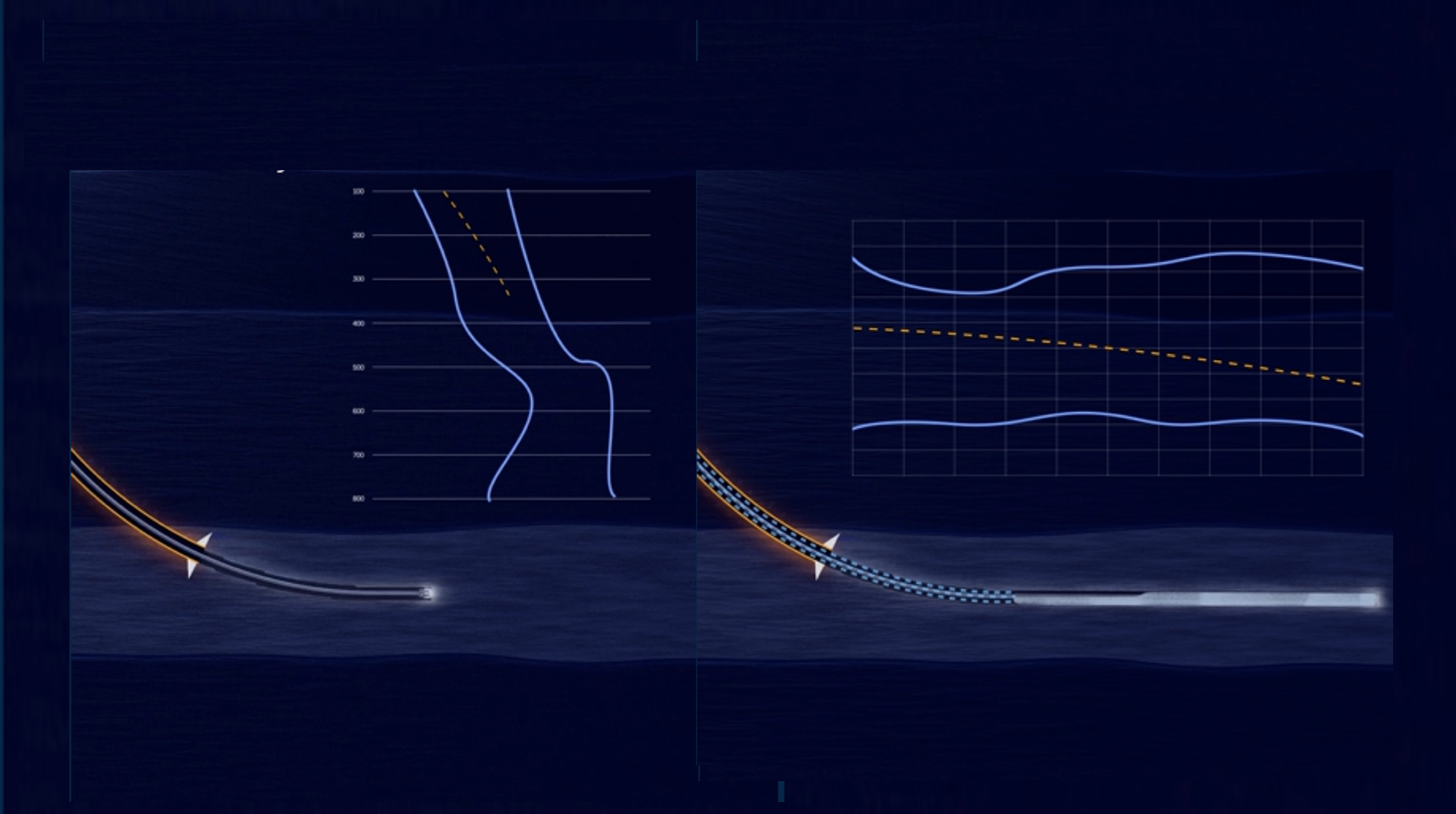
SBP uses a surface choke and RCD to apply backpressure at surface, anchoring CBHP at a given depth; static and dynamic pressure profiles diverge more the further you move from that anchor point, with higher static pressure above and lower below.
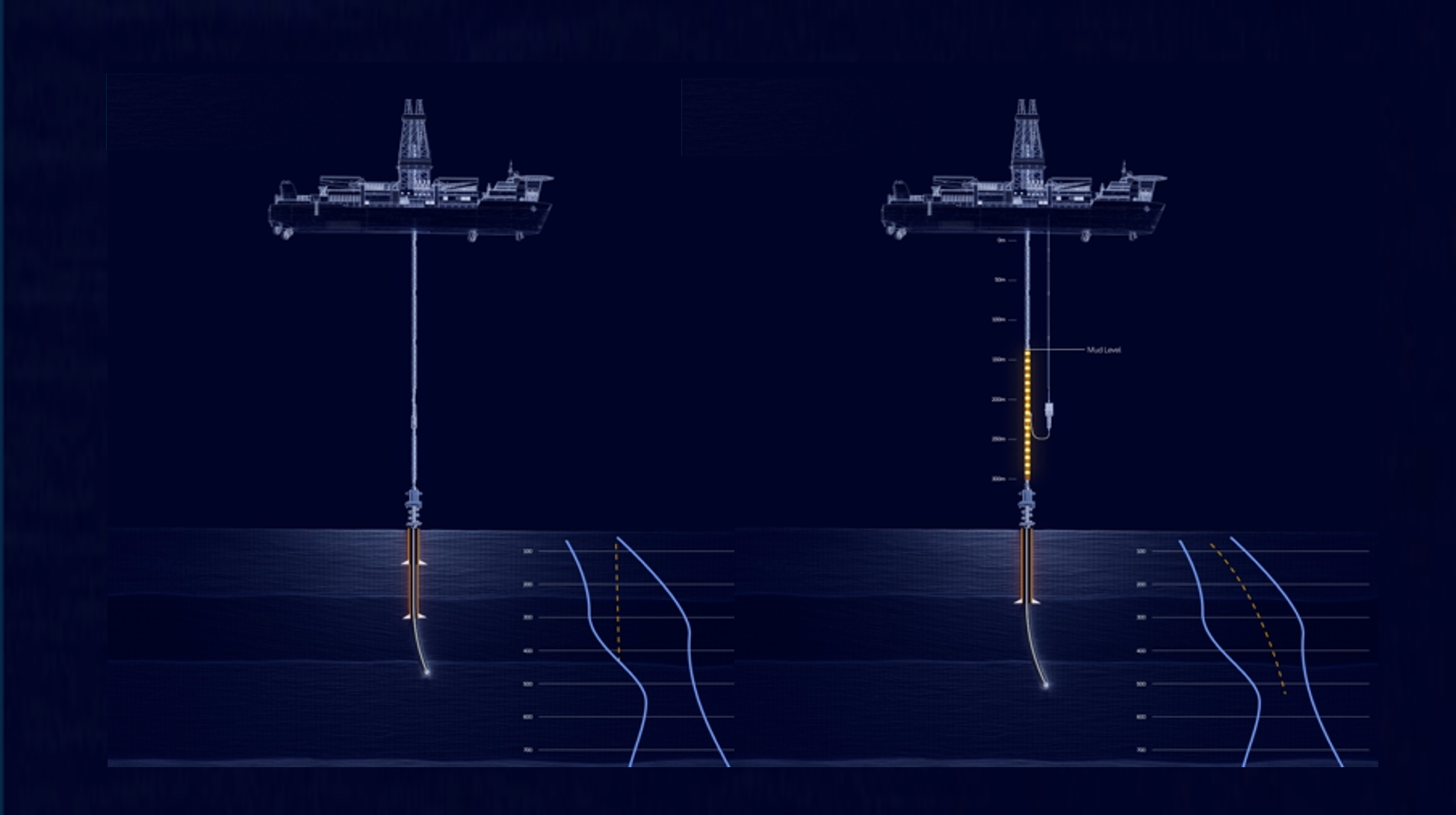
CML adjusts the riser fluid level to control bottom hole pressure, creating a profile with lower pressure at shallow depths and higher deeper in the section, which can be advantageous when the shoe is the weak point.
CCS is applicable on land, shallow water and deepwater, on all rig types, and can be used in all well sections.
SBP can also be used in all environments and on all rig types, but is more limited in shallow and large-diameter sections because of the pressure profile and cuttings load, and may require high backpressure in deep, long horizontals.
CML cannot be used on land or fixed installations; it is for floaters with a subsea BOP, is widely used across sections in deepwater, and can exploit dual-gradient effects in upper sections.
CCS provides continuous circulation while drilling and during connections, which improves hole cleaning and keeps CBHP stable, but it does not offer managed pressure cementing or MPD-style completion operations and requires displacements between drilling and tripping fluids.
SBP manages CBHP by ramping pumps and backpressure during connections, can support Managed Pressure Cementing by displacing to lower-density fluids with applied backpressure, and can be used for certain completion and open-hole gravel-pack operations with adapted assemblies.
CML adjusts riser level instead of backpressure, uses riser-level control during drilling, tripping and completion, supports MPC by stepping riser level down as cement rises, and is particularly strong for managed pressure gravel-pack operations.
CCS benefits from non-stop circulation, giving a clean signal through the mass-flow meter and enabling EKLD in single-phase return flow, but relies on conventional well control if an influx is taken.
SBP uses a mass-flow meter and surface circulation loop to maintain EKLD even in non-circulating phases, and can actively manage and circulate out an influx up to a predefined size, including riser gas handling.
CML uses subsea riser pressure sensors and can treat the riser as an active pit, removing uncertainties from flowline volume and rig motion and delivering very accurate EKLD, but influx management remains conventional unless combined with a riser closure device.
CCS has a small footprint and minimal rig-up time, but requires repeated hose handling on the floor during connections and displacements between drilling and tripping fluids.
SBP has the heaviest rig-time impact: more extensive rig-up (RCD, choke and buffer manifolds, extra lines), fingerprinting, running and retrieving the RCD every trip, and time-consuming displacements in narrow windows, particularly when combining MPD with cementing.
CML typically requires a few hours to install the subsea pump module but then optimizes tripping by avoiding displacements, allowing faster conditioning and MPC operations at higher flow rates in narrow annuli, and generally reducing flat time compared to SBP.
CCS is simple, with a small footprint and excellent pressure profile and hole cleaning, but it is limited in scope: no MPC, no completion or wireline applications, and a strong dependency on displacements.
SBP is versatile in terms of influx management, riser gas handling and special applications like PMCD and wireline under MPD, but comes with a less favourable pressure profile at the shoe, more flat time, more equipment and operational complexity, and potential constraints in shallow or large-hole sections.
CML is user-friendly, versatile in deepwater operations, speeds up tripping, avoids many displacements and provides high-fidelity monitoring and EKLD, but it is restricted to floaters with subsea BOPs, cannot be used on land or fixed installations, and still relies on conventional well control unless paired with a riser closure device.
Executive summary
The three most common Managed Pressure Drilling methods are:
-
Continuous Circulation Systems (CCS)
-
Surface Back Pressure (SBP)
-
Controlled Mud Level (CML).
All three methods aim to maintain constant bottom hole pressure (CBHP), but they do so in different ways and create different pressure profiles in the well.
These differences affect:
-
pressure management capability
-
operational flexibility
-
rig time
-
monitoring accuracy
-
applicability across environments and well sections
Understanding these differences is essential when selecting the most suitable MPD method for a specific drilling operation.
For operators evaluating how CML and SBP can be combined in one flexible system, explore EC-Drill® Dual MPD.
How do they operate?
CCS
The CCS method enables circulation during connections. This is typically achieved by using a sub on top of each drill string stand. After the stand is drilled down, a hose is connected to the sub providing flow down the drillstring during the connection. The CCS method achieves a near constant Equivalent Circulating Density (ECD) profile in the well for circulating and non-circulating operations.
The common drilling approach for CCS is using a lower fluid density to create the desired ECD profile, ensuring this is maintained by continuously pumping down the drillstring
SBP
The SBP method uses a surface choke to apply back-pressure on the well. To create a closed-loop system, a Rotating Control Device seals around the drillpipe in the well, with a dedicated return line leading back to the flowline.
A common drilling approach for SBP is using a lower fluid density to create the desired ECD profile and then compensate for the lack of friction during non-circulating events by applying pressure using the surface choke.
CML
The Controlled Mud Level method controls bottom hole pressure by adjusting the mud level inside the marine riser.
By raising or lowering the mud level, operators can directly control the hydrostatic pressure in the well. This allows CML to create a dual gradient pressure profile, which can reduce pressure at shallow depths while maintaining sufficient pressure deeper in the well.
This pressure profile is particularly beneficial in deepwater wells where the casing shoe is often the weakest point.
More insight: EC-Drill® Managed Pressure Drilling System
Bottom hole pressure
Each MPD method controls bottom hole pressure differently, creating distinct pressure profiles in the well. These pressure profiles strongly influence where the methods can be used and which operational challenges they can address.
CCS
The pressure profile created by CCS is the most consistent across the annulus. From the shoe down to the bit, the profile is a near constant
ECD profile. The only minor fluctuation in pressure occur due to the non-rotating pipe during connections. Unlike the other methods, CCS operates without an anchor point for CBHP, resulting in no significant deviations between static and dynamic conditions above or below any points in the well.
SBP
The pressure profile created by SBP generates higher pressure at shallow depths. This profile can be beneficial if there is a high-pressure zone below the Shoe and lower formation pressure further down in the section. The dynamic and static pressure profiles deviate more from each other the further away from the anchor point you go. The static pressure profile will always be higher above the anchor point and lower below the anchor point whereas the dynamic pressure profile will be lower above the anchor point and higher below the anchor point.
CML
Conversely to SBP, the pressure profile created by CML generates lower pressure at shallow depths. This profile can be beneficial if the Shoe is the weak point with higher formation pressure further down in the section. As with SBP, the dynamic and static pressure profiles deviate more from each other the further away from the anchor point you go. Generally, both static and dynamic pressure profiles are lower above the anchor point and higher below it.
Proof in action: Case study on Dual Gradient effect in Gulf of Mexico deepwater
Usage areas
The applicability of CCS, SBP and CML depends on:
-
drilling environment
-
rig type
-
well section
-
pressure window
The following sections outline the typical environments and well types where each method is used.
On-Demand Webinar: Introducing EC-Drill® Dual MPD
Land, shallow water and deep water
CCS
CCS can be used in all environments.
SBP
SBP can be used in all environments.
CML
CML cannot be used on land. It can be used in shallow waters with limited ability to adjust the fluid column.
Read more: See where CML is most applicable
Types of rigs
CCS
CCS can be used on all types of rigs.
SBP
CCS can be used on all types of rigs.
CML
CML can be used on floaters only with a subsea BOP.
Well sections
CCS
CCS can be used for all sections of a well.
SBP
SBP is limited at shallow depths due the pressure profile crated by the applied backpressure. Large hole sections are a limitation because of the amount and size of cuttings even with a Junk catcher installed. Deep and long horizontal sections require a high amount of back pressure.
CML
CML is frequently used for all sections of a well. Upper sections in deepwater wells are commonly combined by benefiting from the
Dual Gradient Effect. Deep and long horizontal sections require a large adjustment of the riser level.
Operations
Drilling
CCS
CCS maintains a near CBHP and generate the same pressure profiles during static and dynamic conditions through the continuous circulation. The nonstop circulation also improves the hole cleaning. To adjust the BHP the flowrate is changed.
SBP
During connections, the mud pumps are gradually ramped down while applying backpressure to maintain a CBHP. Once the connection is completed, the pumps are gradually ramped up while the backpressure is reduced. To increase the BHP, backpressure can be applied when drilling (and extra pressure applied during connections). To reduce the BHP, it must be planned beforehand by drilling with applied backpressure.
Read more: Pros and cons of CML vs SBP
CML
In CML operations, the mud pumps are ramped down during connections, while the Riser level is increased to maintain a CBHP. Once the connection is completed, the pumps are ramped up while the Riser level is lowered. To adjust the BHP the riser level is changed.
Run in hole
CCS
CCS does not facilitate Casing or Liner runs. When running drillpipe it is possible to pump while tripping and adjust the flowrate to mitigate the surge effect.
SBP
It is possible to strip into the well with the applied backpressure adjusted to mitigate the surge effect. However, SBP cannot adjust BHP for running casings, liners longer than the water depth, or in areas where active BOP use is restricted.
CML
While running in hole, the BHP is maintained by lowering the riser level to mitigate the surge effect.
Cementing
CCS
CCS does not offer Managed Pressure Cementing (MPC).
SBP
MPC is performed by first displacing the well to a fluid with lower density while applying surface back pressure to maintain the BHP. This is provided the Shoe can handle the increased pressure. When the higher density cement slurry goes up the annulus, the applied backpressure is gradually reduced to maintain the BHP.
CML
MPC is performed by reducing the riser level in steps when the cement slurry goes up the annulus.
Have a look at this webinar: EC-Drill® - MPC and Open Hole Gravel Packing
Completion
CCS
CCS is not used for completion operations.
SBP
It is possible to run the completion with SBP by having a separated lower completion assembly to temporarily isolate the reservoir before running the upper completion, provided this assembly is shorter than the water depth. The assembly is then run on a DP with float valves compatible with the completion deployment.
For open hole gravel pack operations, a lower density completion fluid can be used and then gradually reducing the backpressure to prevent losses when the gravel laden fluid is pumped across the screens.
CML
While running the completion the riser level is adjusted to maintain the BHP.
In open hole gravel pack operations, the riser level is reduced in steps to prevent losses when the gravel laden fluid is pumped across the screens.
Case study: EC-Drill® enables gravel packing without inducing losses
OTHER EVENTS
This section highlights a few contingency events and operations which does not apply for all wells.
Losses
CCS
In case of losses the flowrate can be reduced. Drilling may continue with reduced flowrate if the losses subsided.
SBP
In case of losses the flowrate can be reduced. Drilling may continue with reduced flowrate if the losses subsided. For wells at high risk of losses, pre-planning with lower density fluids and increased back pressure is recommended. The applied back pressure can then be adjusted if losses are encountered.
CML
In case of losses the riser level is lowered to stop the losses. Drilling may continue with the same parameters as before if the losses subsided.
Customer success story: How the EC-Drill® enabled gravel packing without inducing losses.
Differential sticking
CCS
CCS is not used for stuck pipe situations.
SBP
SBP can be used to free stuck pipe by displacing the well to a lower
density fluid and then reduce the applied backpressure.
CML
CML can be used to free stuck pipe by lowering the riser level.
Determining actual conditions
CCS
Theoretically, CCS can be used to perform Dynamic Formation Integrity Test (DFIT) and Dynamic Pore Pressure Test (DPPT) by increasing or reducing the flowrate in steps. When the pressure drops below actual pore pressure, the Blowout Preventer (BOP) would be closed, and conventional well control applied.
SBP
SBP can be used to perform DFIT and DPPT by increasing or reducing the applied backpressure in steps. When the DPPT goes below actual pore pressure, SBP can circulate out the resulting influx.
CML
CML can be used to perform DFIT and DPPT by increasing or reducing the riser level in steps. When the DPPT goes below actual pore pressure, the BOP would be closed, and conventional well control applied unless a riser closure device is installed.
Mud Cap Drilling
CCS
CCS is not used for Mud Cap Drilling.
SBP
SBP can be used for Pressurized Mud Cap Drilling (PMCD). Initially, the annulus is displaced to a Light Annular Mud (LAM). The well is monitored and controlled with annular pressure readings and surface choke. The well is kept overbalanced through intermittent injections (bullheading). When pulling out a gunk pill is commonly spotted, and the well is capped above it with a heavy density fluid. Installing the Rotating Control Device when running casing or liner can pose a challenge.
CML
CML can be used for Controlled Mud Cap Drilling (CMCD) without requiring displacements. The well is monitored and controlled with riser pressure readings and the Surface Pump Module (SPM). The well is kept overbalanced by the top-fill and boost pump continuously running and exceeding the injection rate. The excess fluid goes back to the rig. CMCD makes it easy to control and monitor the well regardless of casing or liner size – or when there is no pipe in the well.
Wireline operations
CCS
CCS is not applicable for wireline operations.
SBP
SBP can be used for wireline operations by first installing an adaptor into
the Rotating Control Device and using a lower density fluid in the well.
CML
CML can be used for wireline operations.
Influx Management
This section provides an overview of detection and monitoring capabilities for each system, together with their ability of performing Influx Management.
Well Monitoring and EKLD
CCS
With non-stop circulation, it is easier to monitor the well because there are no volume changes in the flowline. The mass-flow meter also receives a constant flow providing Early Kick and Loss Detection (EKLD), and accurate readings in single phase return flow.
SBP
SBP uses a mass-flow meter for EKLD providing accurate readings in single phase return flow. During non-circulating events, fluid is circulated on the surface through the mass-flow meter to maintain EKLD capabilities.
CML
CML uses the pressure sensors subsea in the riser for improved EKLD. The riser can be added as an active pit, with direct measurements on the well during non-circulating events. By keeping the riser level below the telescopic joint, uncertainties such as flowline volume and rig motion are eliminated making the readings even more accurate and reliable.
Case Study: EC-Drill® Instant Kick Detection Demonstrated on Deepwater Well
Influx management
CCS
CCS relies on conventional well control.
SBP
SBP can manage and circulate out an influx up to a predefined size. It can also address Riser Gas Handling.
Read more: Learn how EC-Drill® Dual MPD supports influx management
CML
CML relies on conventional well control unless operated together with a riser closure device.
Footprint
CCS
CCS has a small footprint, requiring a hose on the rig floor to be connected during connections.
SBP
SBP has a large footprint, requiring a choke manifold, buffer manifold and occasionally a junk catcher plus other minor parts and lines.
CML
CML has a medium footprint, as the main component is placed subsea. Requires a Launch and Recovery System (LARS) in the moonpool area.
RIG TIME
Rig time efficiency is a key factor when evaluating MPD systems. While MPD can improve drilling performance, different systems may introduce additional operational steps or equipment requirements.
CCS
CCS requires minimal rig-up time. During drilling operations, the hose needs to be connected and disconnected to and from the sub on the stand during connections. It is necessary to displace the well between drilling fluid density and tripping fluid density.
SBP
SBP has a more extensive rigging process involving the setup of the annular and Rotating Control Device along with flowlines, bleed-off lines, and umbilicals. before commencing operations, testing and fingerprinting is needed. The Rotating Control Device must be run and retrieved every trip. During drilling operations, the mud pumps are ramped down and up during connections while backpressure is adjusted. It is necessary to displace the well between a drilling fluid density and a tripping fluid density. The displacements and running in hole in a heavy density fluid are particularly time consuming in a narrow operating window. If using Managed Pressure Cementing (MPC), additional time is required for displacing out the tripping fluid to a cementing fluid due to the narrow annulus caused by the liner in the hole.
An alternative to displacing to trip fluid can in some instances (see Tripping Out and Run in Hole sections) be stripping out at reduce speed instead. However, frequent stripping leads to more frequent retrievals and deployments of the Rotating Control Device to change seals.
CML
CML typically requires a couple of hours to install the SPM before commencing operations. During drilling operations, the mud pumps are ramped down and up during connections while the riser level is adjusted.
Tripping operations are optimized without requiring displacements. MPC operations are faster by enabling higher flowrates when conditioning the fluid in a narrow annulus.
Summary
CCS, SBP and CML each offer unique advantages depending on the well design, drilling environment and operational objectives.
-
CCS offers simplicity and stable circulation.
-
SBP provides strong capabilities for influx management and overall pressure management.
-
CML offers operational flexibility, improved monitoring and the ability to benefit from the dual gradient effect, which can simplify well design in deepwater wells.
Understanding these differences helps drilling engineers select the most suitable MPD method for their specific well conditions.
Want to explore advanced MPD solutions?
Enhanced Drilling has developed technologies that build on the advantages of Controlled Mud Level and dual gradient drilling to improve pressure management, monitoring and operational efficiency.
If you would like to discuss how these technologies can support your drilling operations, get in touch with our team.
Fill out the form and I'll get back to you.